
Stamped Concrete

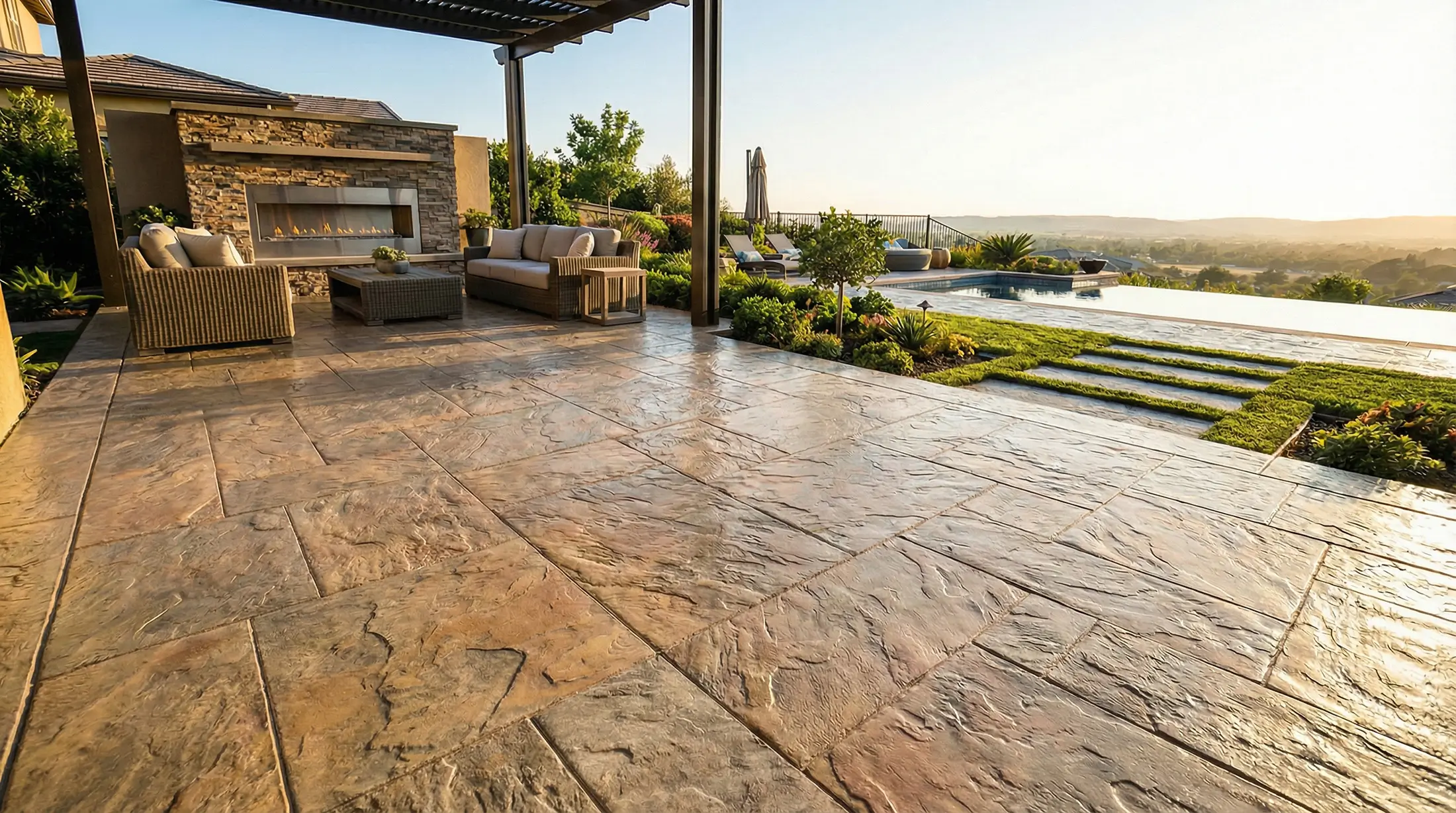
Stamped concrete looks simple on the surface. That is, until one small mistake turns into a major, highly visible problem.
And the cost of those mistakes isn’t theoretical. A 2023 peer-reviewed study analyzing large civil engineering projects found that rework can eat up 5% to 20% of a project’s total contract value when planning, coordination, or execution slips. That’s a margin hit no commercial crew wants to absorb, especially on decorative or high-profile concrete slabs.
This article breaks down the seven mistakes that most often derail stamped concrete installation, and how to avoid them before they compromise a pour. Here’s what we’ll cover:
- Site-prep issues that weaken the slab before the fresh concrete pour even starts
- Mix and material choices that lead to weak surfaces or color inconsistency
- Timing and finishing errors of the concrete mix that ruin pattern depth or texture
- Color-application mistakes that show up as blotches or fading
- Jointing and reinforcement missteps that invite early cracking
- Curing and sealing shortcuts that shorten service life
- Maintenance oversights that cut the lifespan of stamped surfaces
Mistake #1: Overlooking Site Preparation
When a stamped concrete install doesn’t fail at the surface, it fails underneath it.
When the base isn’t stable, compacted, and graded correctly, even the best finishing crew can’t save the slab from future cracking, settling, or drainage issues.
Importance of a Stable Subgrade
Stamped concrete needs a solid, uniform base to handle movement, load, and weather. Soft spots and inconsistent compaction create weak zones that shift under traffic or temperature swings.
Commercial jobs, such as walkways, plazas, equipment pads, loading areas, are even less tolerant of variance. Small mistakes show up quickly.
Crews should run compaction tests, reinforce weak soils with granular fills, and confirm uniform stability before concrete forms or rebar go in. When this step is rushed, the slab always tells on you later.
Drainage and Grading Concerns
Water is the quiet threat behind most slab failures. If a site doesn’t direct water away from structures or hardscape, you’re inviting pooling, freezing–thaw damage, and accelerated surface wear.
Even one or two degrees of incorrect grade can cause issues. Commercial sites, city sidewalks, and hardscape zones all need a clear, confirmed drainage plan before trucks roll in.
Mistake #2: Inadequate Mix Design or Materials
Stamped concrete isn’t forgiving. If the mix design is off or the materials aren’t suited for the environment, the slab will struggle long before anyone notices color or pattern issues.
Concrete Strength Specifications
A stamped slab has to be both decorative and durable. Standard mixes rarely check both boxes.
Commercial sites raise the stakes even higher. Heavy foot traffic, equipment loads, freeze–thaw cycles, and UV exposure all influence what the mix needs to handle.
That’s why specs must match the project’s weight demands, climate, and expected exposure. A walkway in Idaho winters needs different proportions and admixtures than a concrete patio in a warmer region. When the mix design doesn’t match the conditions, failures tend to show up early.
Use of Curing and Sealing Products
Curing and sealing products are just as critical as the concrete itself. They regulate moisture loss, lock in color, and protect the surface from abrasion and UV breakdown.
Incorrect products or skipped curing steps lead to dusting, uneven color, and reduced surface strength. Timing matters too. Applying compounds too early or too late changes how the slab develops and how well the final finish holds up.
Picking the right product for the climate and following manufacturer guidance is one of the simplest ways to protect long-term performance.
Mistake #3: Improper Placement and Finishing
Stamped concrete succeeds or fails in the narrow window between placement and final finishing. Timing, surface conditions, and crew coordination all shape how well the pattern takes and how long the slab holds up.
Timing the Stamping Process
Stamp too early and then paste tears. Stamp too late, and the pattern barely registers. That small window is everything.
Finishers should routinely test the surface by hand, watch the sheen disappear, and adjust pace based on temperature, wind, humidity, and the concrete’s set. Fast-setting mixes shrink that window even more, making preparation and communication non-negotiable.
When crews chase the concrete instead of staying ahead of it, the slab shows it.
Surface Moisture and Temperature
Weather controls how the surface behaves. High heat, low humidity, or direct sun can dry the paste before stamping starts, leading to crusting or shallow impressions. Cold mornings slow the set and can tempt crews into stamping too soon.
Evaporation retarders, windbreaks, shade, or mix adjustments aren’t optional. They’re part of managing the slab. Monitoring both temperature and surface moisture keeps the finish workable, consistent, and ready for clean impressions.
Crew Coordination
Stamped concrete demands synchronized movement. Finishers, pump operators, and material handlers all need to work in the same rhythm. A single delay can throw off the set and force crews to rush stamping or finishing.
Clear roles, pre-pour walkthroughs, and established communication minimize mistakes and keep the slab on schedule. When everyone works in sequence, pattern depth and surface integrity improve dramatically.
Mistake #4: Errors in Color Application
Stamped concrete relies on color just as much as pattern. When color is applied unevenly, inconsistently, or at the wrong time, the slab loses the realism and visual depth that make stamped surfaces stand out.
Most of these issues start with small process errors that quickly become impossible to hide.
Color Hardener and Release Agent Use
Color hardeners and release agents only work when they’re applied to concrete evenly and at the correct stage of the set. Uneven broadcast leads to blotches. Poor timing leads to streaks, weak color, or surface tearing once stamping begins.
Different products also behave differently. Powder releases, liquid releases, integral color, and hardeners each require specific techniques. Mixing them up or treating them all the same creates color inconsistency across the slab.
Consistent measurements, uniform broadcasting patterns, and clear timing cues keep the slab looking cohesive instead of patchy.
Achieving Uniform Color
The challenge grows on large pours. Multiple trucks, multiple batches, and changing weather can cause subtle differences in shade or texture. Even a small shift in water content or finishing pace can show up as color variation once the slab cures.
Batch logs, identical water-to-cement ratios, and consistent finishing sequences reduce the variables. When the project requires multiple days of work, careful planning at construction joints helps blend new sections with previous ones.
Test Panels and Early Checks
Test panels remain one of the most effective tools for previewing how color behaves on the actual site. Lighting, climate, and slab conditions heavily influence final appearance.
Confirming the look before full production pours reduces surprises and keeps expectations aligned. A quick review early in the project eliminates costly corrections later.
Mistake #5: Neglecting Joints and Crack Control
Concrete will always move. Temperature swings, moisture changes, and load cycles create stresses that the slab can’t ignore.
When joints are poorly planned or skipped entirely, the slab creates its own joints in the form of random cracking. Decorative work makes those cracks even harder to hide.
Placement of Control Joints
Stamped concrete shouldn’t be treated as one continuous surface. Control joints define where the slab is allowed to crack. Without them, the slab chooses its own path, usually in the most visible spots.
Most commercial and large-format pours call for joints every 10 to 15 feet, adjusted for slab thickness, geometry, and environmental conditions. The layout matters too: joints should form clean, logical patterns that complement the stamp rather than disrupt it.
Tools like early-entry saws or custom jointing inserts help maintain pattern integrity while still providing the crack relief the slab needs.
Reinforcement Considerations
Reinforcing steel or fiber reinforcement distributes stress, reduces joint widening, and strengthens the slab against cracking. MST-BAR or corrosion-resistant reinforcement offers added durability in freeze–thaw regions or areas exposed to deicing agents.
Skipping reinforcement to save time or budget often backfires. Once cracking starts, repairs are more noticeable on decorative surfaces and usually more expensive than proper reinforcement upfront.
Planning for Complex Designs
Curves, borders, radius features, and intricate patterns require more careful joint planning. Poorly placed joints can cut awkwardly across stamp lines or create visual breaks that stand out.
Early coordination between layout and finishing teams prevents conflicts and keeps the completed surface visually clean. Jointing is both a structural decision and an aesthetic one; if one side is ignored, the results suffer.
Mistake #6: Skipping Proper Curing and Sealing
Curing and sealing shape how a stamped concrete surface looks, performs, and ages. When these steps are rushed or skipped, the slab loses strength, color consistency, and long-term durability.
Decorative surfaces are especially vulnerable because the finish is part of the product, not an optional cosmetic layer.
Curing Compound Application
Concrete needs controlled moisture loss to gain strength and develop uniform color. Without proper curing, the surface can chalk, dust, or discolor.
Timing is very important. Apply curing compounds too early and they trap excess water. Apply too late, and the slab loses moisture faster than it should.
Temperature, wind, and direct sun all influence how the surface cures. Monitoring these conditions and adjusting the timing of curing compounds helps the slab develop evenly and reduces the risk of weak or brittle areas.
Choosing the Right Sealer
Sealers protect the surface from abrasion, chemicals, moisture, and UV exposure. They also shape the final appearance: gloss level, color depth, and slip resistance all depend on the product chosen.
High-traffic areas often require sealers with stronger abrasion resistance. Exterior slabs in sunny regions benefit from products with UV stabilizers. Wet or food-service environments may need slip-resistant finishes. Matching the sealer to the use case is essential for the surface to hold up.
Ongoing Maintenance for Stamped Concrete
Stamped concrete isn’t “pour it and forget it.” The finish ages with traffic, weather, and exposure. Periodic resealing keeps the surface protected and maintains appearance. Routine cleaning protects the sealer from premature breakdown.
Including a basic maintenance plan with turnover documents helps owners understand how to preserve the slab’s life and performance. The small effort up front prevents larger failures later.
Mistake #7: Overlooking Long-Term Maintenance
Stamped concrete is durable, but it isn’t maintenance-free. The surface takes on foot traffic, weather, equipment, UV exposure, and seasonal cycles that all influence how it ages.
When owners or facility teams treat stamped concrete like standard gray flatwork, problems show up faster, and repairs become more noticeable.
Wear and Surface Breakdown
Decorative surfaces rely on texture, pattern depth, and color. As sealers wear down, those details become vulnerable. Abrasion, moisture intrusion, and freeze–thaw cycles can all erode the surface if protection fades.
This happens gradually and often goes unnoticed until color begins to dull or the texture loses definition. Regular inspections catch these early signs long before they turn into full resurfacing or patching jobs.
Resealing Cycles
Resealing is the backbone of stamped concrete maintenance. Most commercial slabs need resealing every 2–3 year,s depending on traffic, climate, and exposure. High-traffic areas or surfaces exposed to deicing chemicals may require more frequent cycles.
Using compatible sealers from one cycle to the next prevents adhesion issues. A mismatched sealer can haze, peel, or trap moisture. These problems are harder to fix than applying the correct product in the first place.
Cleaning and Surface Care
Routine cleaning extends the life of both the sealer and the concrete. Removing debris, clearing drains, and addressing spills keeps contaminants from staining or weakening the finish.
Simple care practices (low-pressure washing, neutral cleaners, and avoiding harsh chemicals) go a long way toward preserving color and texture. When maintenance becomes part of the regular facility routine, stamped concrete maintains its appearance and performance for decades.
The Work You Don’t See Is What Makes Stamped Concrete Last
Stamped concrete is only as good as the materials behind it. Reliable admixtures, color systems, release agents, curing compounds, and reinforcement all reduce risk, protect your schedule, and give finishers the consistency they need in the field.
When crews can depend on their materials, every pour becomes more predictable. And every project becomes easier to stand behind.
At Concrete Construction Supply, we support commercial contractors with products built for demanding jobsites and climates across the Mountain West and beyond. From mix enhancements to release agents to sealing systems, our technical team helps you select the right materials for the conditions you’re working in.
If you’re planning a stamped concrete project and want products you can trust from pour to finish, connect with Concrete Construction Supply today. Our team is ready to help you choose the right solutions for long-lasting, high-performance results. Reach out now!


Share
Recent Posts

January 30, 2026
10 Most Common Rebar Installation Mistakes and How to Avoid Them
Installing rebar is one of the most important steps in concrete construction. It determines how strong, stable, and long-lasting your structure will be....
January 17, 2026
How to Choose the Right Concrete Sealer for Stamped Surfaces
Stamped concrete can look incredible, until the wrong sealer turns a great finish into a cloudy, slippery, or uneven surface. Most contractors have...
January 17, 2026
7 Mistakes to Avoid During Stamped Concrete Installation
Stamped concrete looks simple on the surface. That is, until one small mistake turns into a major, highly visible problem. And the cost...

