
Rebar

For many homeowners and builders today, construction choices start with insulated concrete forms and extend all the way down to what’s reinforcing the concrete inside them.
Insulated concrete forms have reshaped how builders think about durability, comfort, and long-term performance. As ICF construction continues to grow across residential and commercial markets, the materials used inside the wall matter just as much as the forms themselves.
One of the most impactful advancements in this space is MST-BAR® fiberglass rebar: a modern alternative to traditional steel rebar that redefines concrete reinforcement inside ICF walls.
For contractors building high-performance ICF homes, choosing the right reinforcement affects energy performance, longevity, and overall job efficiency. Fiberglass reinforcement offers a different approach to reinforced concrete that aligns naturally with the goals of insulated construction.
Here’s what you need to know:
The Importance of Reinforcement in Insulated Concrete Forms
Insulated concrete forms combine structure and insulation into a single building system. Stacked ICF blocks, typically made from polystyrene foam, create the shape of the wall while concrete is placed inside during the concrete pour. Once cured, the result is a solid concrete wall surrounded by continuous insulation.
What gives ICF walls their strength, however, is internal reinforcement. Rebar carries tensile loads, supports lateral forces, and plays a central role in overall structural integrity.
Traditionally, that reinforcement has been steel, but steel comes with trade-offs that become more noticeable in high-performance construction.
What Is MST-BAR® Fiberglass Rebar?
MST-BAR® is a type of FRP rebar (fiber-reinforced polymer) engineered specifically for concrete applications.
Unlike steel, fiberglass rebar does not corrode, conduct heat, or react with moisture. It’s manufactured from glass fibers bound in resin, producing a reinforcement material that’s strong, lightweight, and stable over time.
In ICF construction, where durability and efficiency go hand in hand, FRP rebar complements the performance goals of the wall assembly rather than working against them.
Fiberglass Rebar vs Steel Rebar in ICF Walls
At first glance, reinforcement might seem like a behind-the-scenes detail. After all, once the concrete is poured, it’s out of sight.
However, the type of rebar used inside ICF walls has a real impact on how a home performs over time. Understanding the practical differences between fiberglass rebar and steel rebar helps explain why more ICF builders are making the switch.
Corrosion Resistance Inside Concrete Forms
Steel rebar is vulnerable to corrosion, particularly in environments where moisture intrusion, salts, or soil contact are present. Over time, corrosion can compromise a reinforced concrete wall from the inside out.
Fiberglass rebar does not rust. For ICF walls designed to last decades with minimal maintenance, this characteristic alone makes FRP rebar a strong alternative to steel.
Thermal Performance and Energy Efficiency
Steel is highly conductive. When used inside insulated assemblies, it can create thermal bridges that reduce overall energy efficiency. Fiberglass rebar, by contrast, is non-conductive, helping maintain a consistent thermal barrier.
This supports a tight building envelope, contributing to lower energy bills, improved comfort per square foot, and better long-term performance compared to conventional wood frame homes.
Weight, Handling, and Jobsite Efficiency
FRP rebar weighs significantly less than steel rebar. Crews moving reinforcement through stacked concrete forms or setting bars inside tall ICF walls often find fiberglass easier to handle, cut, and place.
Lighter reinforcement can improve productivity during layout and placement, especially on large ICF homes or multi-story concrete wall systems.
Structural Performance in Reinforced Concrete
A common misconception is that fiberglass rebar is “weaker” than steel. In reality, FRP rebar offers high tensile strength and predictable behavior when designed correctly.
In ICF construction, reinforcement design is driven by engineering requirements, wall height, wall thickness, and loading conditions. When specified properly, fiberglass reinforcement performs exceptionally well within ICF systems, delivering reliable structural integrity without the long-term risks associated with corrosion.
MST-BAR® and Fox Blocks®: A Natural Fit for ICF Homes
Many builders pair MST-BAR® with Fox Blocks because the materials work together seamlessly. Fox Blocks ICF systems are designed for strength, consistency, and energy performance, and fiberglass reinforcement aligns with those same goals.
Using fiberglass rebar inside Fox Blocks helps builders maintain uniform insulation, reduce thermal interruptions, and deliver durable ICF homes that outperform traditional construction methods.
Supporting Health, Comfort, and Indoor Air Quality
ICF homes are often chosen for comfort and health benefits. The combination of concrete mass and continuous insulation helps regulate temperature and reduce air leakage, creating more stable indoor conditions year-round.
That matters more than ever, especially as awareness grows around what’s happening inside our homes. According to the U.S. Environmental Protection Agency, people spend about 90% of their time indoors, making indoor air quality a priority rather than a luxury.
By limiting thermal bridging and moisture-related degradation, fiberglass rebar supports stable wall assemblies that contribute to better indoor air quality over time.
A well-reinforced concrete wall system also resists cracking and movement, helping preserve the performance of finishes and interior environments while reducing pathways for air and moisture intrusion.
Sustainability and Long-Term Value
Fiberglass rebar supports sustainable construction goals in several ways. Its long lifespan reduces replacement needs, and some FRP products incorporate recycled materials, helping lower overall environmental impact.
When combined with insulated concrete forms, fiberglass reinforcement contributes to durable ICF homes that consume significantly less energy over time. In fact, ICF walls can require about 44% less energy to heat and 32% less to cool compared with traditional wood-framed houses. They also demand fewer repairs compared to wood-frame homes.
Installation Considerations for Contractors
Working with fiberglass rebar inside ICF blocks requires only minor adjustments for crews accustomed to steel. FRP rebar is cut with standard tools, tied similarly, and placed according to engineered spacing requirements.
Because it’s lightweight and easy to stage, fiberglass reinforcement can simplify material handling during the concrete pour, particularly on taller ICF walls or complex layouts.
Build Smarter Homes with the Right ICF Construction Materials
Choosing the right reinforcement is one of the most important decisions in any ICF project. From long-term durability and energy performance to jobsite efficiency and maintenance down the road, materials matter.
Fiberglass rebar and insulated concrete forms work best when they’re sourced from a quality supplier that understands how these systems come together in the real world.
At Concrete Construction Supply, we support builders, contractors, and homeowners with the products and guidance needed to execute high-performing ICF construction. Whether you’re planning a single ICF home or managing larger concrete wall projects, the right materials make the entire process smoother.
If you’re exploring fiberglass rebar suppliers, Fox Blocks ICFs, or complete ICF construction solutions, we are here to help you build stronger, more efficient structures that stand the test of time.
Reach out to learn more.

Introducing MST-Bar: 5 Reasons to Use MST-Bar for Concrete Reinforcement
MST-BAR® Fiberglass Rebar: The Future of Reinforcement in ICF Construction
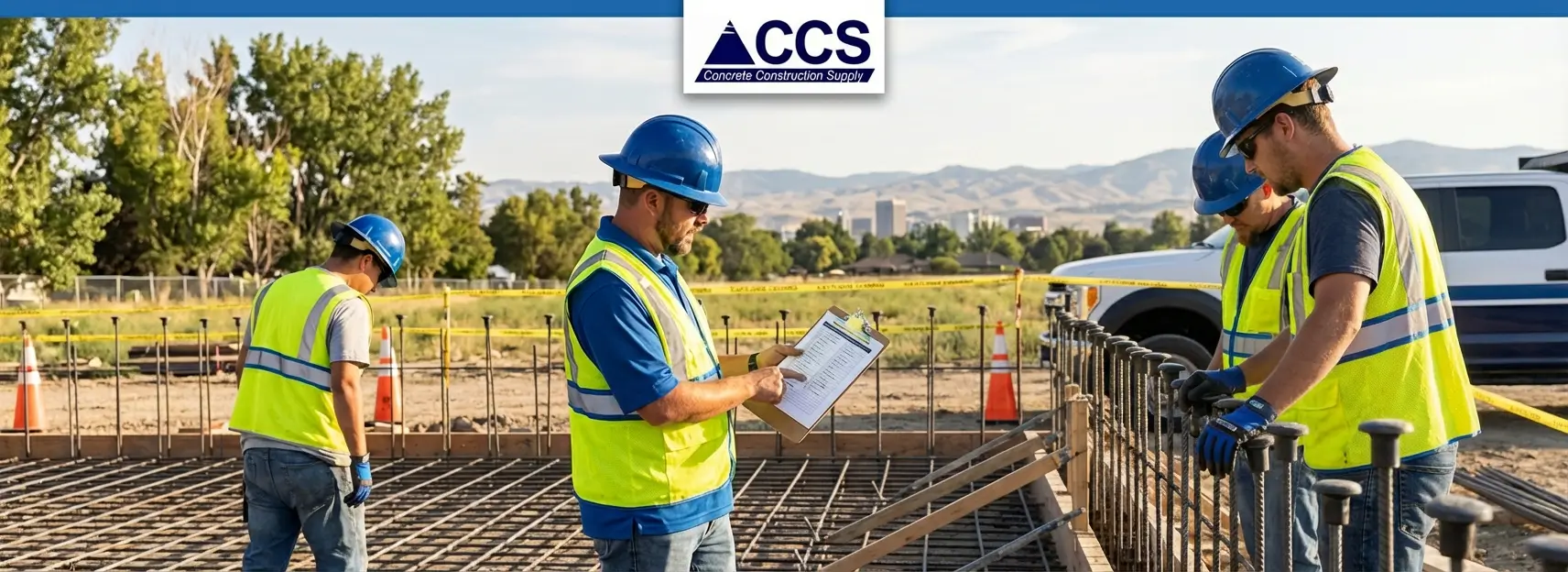
Concrete Construction Safety Checklist for Every Site

10 Most Common Rebar Installation Mistakes and How to Avoid Them

How to Choose the Right Concrete Sealer for Stamped Surfaces
Share
Recent Posts
February 18, 2026
Introducing MST-Bar: 5 Reasons to Use MST-Bar for Concrete Reinforcement
Concrete has always been a workhorse material in the construction industry. From foundations and slabs to retaining walls and large-scale concrete structures, it...
February 12, 2026
MST-BAR® Fiberglass Rebar: The Future of Reinforcement in ICF Construction
For many homeowners and builders today, construction choices start with insulated concrete forms and extend all the way down to what’s reinforcing the...
February 7, 2026
Concrete Construction Safety Checklist for Every Site
Key Takeaways: Concrete construction is one of the most demanding and hazardous activities in the building industry. From handling heavy materials to working...

