
Stamped Concrete
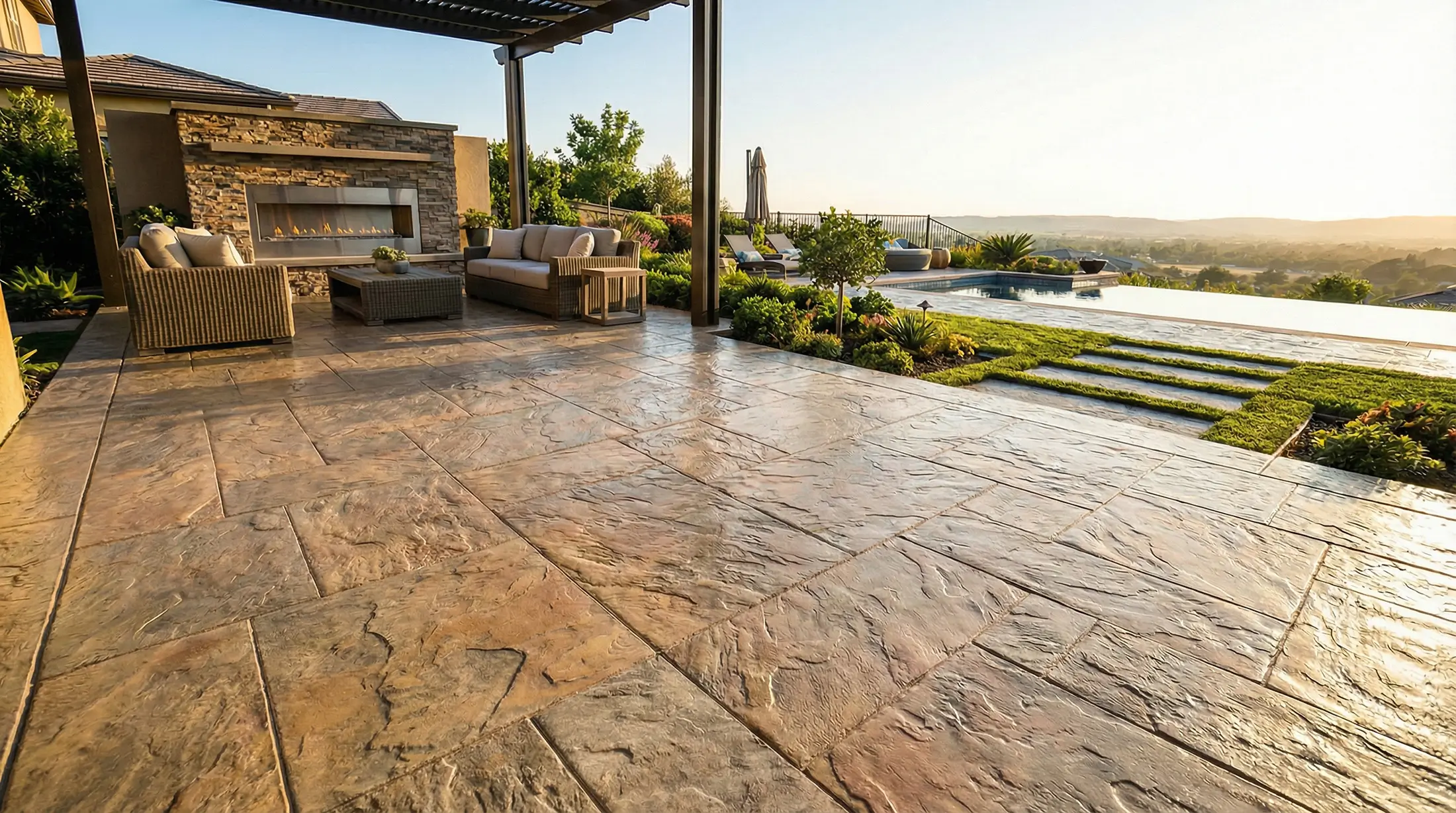
Stamped concrete can look incredible, until the wrong sealer turns a great finish into a cloudy, slippery, or uneven surface. Most contractors have seen it happen: perfect texture and color work, undone by a sealer that wasn’t suited to the conditions.
The American Society of Concrete Contractors (ASCC) notes in its Decorative Concrete Council Best Practices that most stamped-concrete sealer failures come down to three things: applying the sealer too early, applying too much, or applying it over a poorly cleaned surface.
When any one of those happens, problems like whitening, delamination, or loss of traction show up fast, and usually lead to callbacks. To help you avoid that, this guide breaks down what actually matters when choosing a stamped concrete sealer, including:
- What makes stamped concrete harder to seal than standard flatwork
- The differences between penetrating, film-forming, and hybrid sealers
- How to match sealer type to traffic, climate, moisture, and color expectations
- Application practices that prevent whitening, blistering, or slick spots
- Maintenance steps that extend the life of sealed stamped surfaces
Understanding Stamped Concrete Surfaces
Stamped concrete is a textured system built with hardeners, release agents, and patterned tooling. All of this affects how a sealer bonds, breathes, and performs.
How Stamped Concrete Is Made
Stamped surfaces start with freshly poured concrete. While the slab is still plastic, installers broadcast color hardener, apply a release (powdered or liquid), and press mats or skins into the surface of the freshly placed concrete.
When the slab cures and the release is cleaned off, you’re left with deep texture, grout lines, and color variation that mimic stone, brick, or wood.
Each of those steps introduces variables a sealer has to handle:
- Color hardeners that need protection to retain depth
- Release residue that must be fully removed before sealing
- Texture and grout lines that trap moisture if the slab isn’t dry
Why Stamped Concrete Is Harder to Seal
Stamped concrete brings challenges that don’t show up on broom-finished or troweled slabs.
The textured surface creates pockets that hold sealer, which can lead to thick spots or slick areas if the material builds up. Those same low points tend to hold moisture longer, increasing the chances of whitening or blushing if the slab isn’t fully dry before application.
Release agent residue is another issue. If it isn’t fully cleaned off, it can interfere with adhesion and cause the sealer to lift or peel. Stamped concrete also uses color hardeners and antiquing systems that can react poorly with sealers that don’t breathe or that run too hot on application.
All of these factors mean stamped surfaces behave differently from standard flatwork.
Why Sealing Stamped Concrete Matters
A stamped concrete surface depends on the sealer as much as the pattern or color work. Without the right protection, water, deicing chemicals, oil, and regular traffic begin wearing it down almost immediately.
Moisture settles into the textured profile more easily than it does on smooth surfaces or flatwork. In cold regions, that trapped moisture can freeze inside the concrete and lead to scaling or early surface failure.
Even in warm climates, repeated wetting and drying can weaken the finish over time.
Protecting Appearance and Traction
Sealing also protects the visual work that makes stamped concrete stand out. Color hardeners, release techniques, and antiquing details can fade or dull when they are left unsealed. A good sealer preserves that depth and variation so the surface keeps the same look it had at installation.
There is a safety factor as well. Stamped concrete is common in entrances, walkways, courtyards, and gathering areas where secure footing matters. The wrong sealer, or too much of the right one, can create slick spots when the surface gets wet.
A well-matched sealer keeps stamped concrete performing as intended. It safeguards the finish, extends the life of the surface, and helps maintain safe traction where people walk every day.
Types of Concrete Sealers for Stamped Concrete
Selecting the right sealer starts with understanding how each product behaves. Stamped concrete has deeper texture and more color variation than standard flatwork, so the way a sealer absorbs, bonds, and cures plays a bigger role in the final result.
Penetrating vs. Film-Forming Sealers
Penetrating sealers soak into the concrete and react within the pores. They provide water and salt protection without changing the surface appearance. This makes them a fit when the goal is a natural, low-sheen look or when traction is more important than gloss.
Film-forming sealers sit on the surface and create a protective layer. Acrylics, urethanes, and epoxies fall into this group. These products are popular on stamped concrete because they deepen color and bring out the variation in the pattern.
Acrylics are the most common option for exterior stamped slabs. They offer strong color enhancement, reasonable durability, and easier maintenance over time. Urethanes and epoxies are more durable but can be too slick or too rigid outdoors unless the conditions are right.
Concrete Floor Sealers and Waterproofing Products
Many products are labeled as concrete floor sealers or waterproofing solutions. Some work well on stamped surfaces, but others are designed for smoother slabs and create problems when used on textured work.
A sealer that traps vapor can lead to whitening. A sealer that builds too thick can settle into grout lines and affect traction. Stamped concrete holds more moisture in its low points, so breathability becomes one of the most important factors to look for.
Matching the Sealer to the Project
Choosing a sealer is not just about gloss level. It also depends on exposure, climate, traffic, and how often the surface can be maintained or recoated.
High-use areas benefit from a sealer with stronger abrasion resistance. Public plazas, commercial entries, or interior stamped floors exposed to carts and foot traffic need a film that can handle repeated wear without losing clarity.
Exterior stamped concrete patios and walkways often benefit from a high-quality acrylic that balances color enhancement with breathability. Interior stamped floors that see frequent spills, forklifts, or heavy foot traffic may need a higher-performance system if the conditions support it.
The goal is to match the product to real site conditions. A well-chosen sealer protects the work, extends its life, and reduces the chances of premature wear or callbacks.
Key Considerations for Sealer Selection
No two stamped concrete projects face the same conditions. Traffic, climate, moisture, and color expectations all influence how a sealer will perform.
Taking the time to evaluate these factors helps prevent early wear, whitening, or traction issues.
Project Scale and Environment
Stamped concrete used in public plazas or entryways faces heavier use than a residential patio. High-traffic areas need a sealer that can handle constant abrasion without losing clarity or peeling.
Climate plays a role as well. Regions with freeze-thaw cycles require products that can breathe and release moisture. Surfaces that see regular deicing salts need a sealer that resists chemical intrusion.
Even sunlight exposure matters because UV can dull or yellow some sealers over time.
Solvent-Based vs. Water-Based Acrylics
Solvent-based sealers deepen color and create a warmer, richer finish, which is why they are widely used on stamped concrete.
They also recoat more easily because fresh solvent softens the previous layer. Water-based acrylics offer lower odor and fewer VOC concerns, and they help avoid the fast flashing that can trap moisture in textured surfaces.
The choice of solvent based acrylic sealers often comes down to appearance goals, environmental requirements, and whether the slab tends to hold moisture in the grout lines.
Safety, Slip Resistance, and Maintenance Needs
Traction is one of the most common concerns with stamped concrete. Film-forming products can become slick after rain or routine washing, especially if too much material is applied. A traction additive in the final coat can help maintain grip without changing the appearance.
Maintenance expectations also guide the choice. Some sealers are easy to recoat after cleaning. Others require full stripping before a new layer can be applied.
Acrylics are usually easier to maintain, while urethane and epoxy systems offer longer life but require more careful preparation.
Timing and Process for Sealing Concrete
During the early cure period, the slab is still going through cement hydration. Sealing too soon can trap moisture needed for proper cement hydration, which increases the chances of whitening, blistering, or weak film adhesion. Waiting for full cure and confirming slab dryness helps avoid these issues.
Some stamped slabs are placed with curing compounds still present on the surface. If the compound is not compatible with the selected sealer, it can block bonding and lead to peeling or cloudy areas. Before sealing, the surface should be checked for curing compounds and either cleaned, removed, or confirmed as compatible with the sealer being used.
Surface preparation is just as important. Release agents, dust, or jobsite residue can interfere with adhesion. A clean and dry slab gives the sealer the best chance to bond and perform as intended.
Evaluating these factors helps match the product to real-world conditions. A sealer chosen with the site in mind will last longer, look better, and reduce the chance of callbacks.
Application Best Practices for Stamped Concrete Sealer
Even the right sealer can fail if it is applied incorrectly. Stamped concrete has deeper texture and more variation than standard flatwork, so the application process plays a major role in the final appearance and long-term performance.
Surface Preparation and Cleaning
A clean surface is the most important starting point. Any leftover release agent, dust, or residue can block adhesion and cause the sealer to lift or cloud.
Most projects begin with a thorough wash to remove debris, followed by enough dry time to clear moisture from the low spots in the texture.
Heavily used commercial surfaces may need additional preparation. A light acid wash, properly neutralized and rinsed, can help open the surface and improve penetration. The goal is a clean, dry slab with no contaminants before the first coat goes down.
Proper Curing and Coverage
Timing matters. If the sealer is applied too soon, the slab may still be releasing moisture. That moisture can get trapped under the film and create whitening or blistering. Waiting for a complete cure and confirming dryness helps prevent these issues.
Coverage matters as well. Thin, even coats perform better than a single heavy pass. Heavy application can settle into the textured joints, create slick spots, or produce a cloudy finish. Two light coats allow better control, better color clarity, and better long-term bonding.
Rollers should be chosen carefully for stamped work. A solvent resistant roller helps prevent shedding or softening when using solvent-based acrylics, which keeps the finish even and avoids debris in the film.
Drying conditions also influence the result. Cool temperatures or high humidity slow the process and may require longer intervals between coats. Warm weather speeds it up but can cause premature skinning if the product flashes too fast.
A careful application process protects the stamped surface and sets the sealer up for long-term performance. When the preparation is thorough and the coating is applied correctly, the finish looks better and holds up longer.
Common Pitfalls and How to Avoid Them
Stamped concrete can deliver a strong finish, but it is also sensitive to small mistakes during sealing.
Most problems that show up later trace back to avoidable issues during surface prep or application.
Over-Application or Uneven Sealing Compound
Too much sealer causes many of the appearance problems contractors run into. Thick areas trap air, stay soft longer, and create slick or cloudy patches. Uneven coverage leads to inconsistent gloss and color enhancement, which is especially noticeable on patterned surfaces.
Applying thin coats prevents these issues. Using the right roller or sprayer helps control how much material lands on the surface.
When in doubt, testing a small, out-of-the-way area shows how the product behaves before the full application begins.
Moisture Problems and Trapped Air
Whitening, blushing, or blistering usually point to moisture under the film. Stamped concrete holds water in the textured joints and low areas, so even a slab that looks dry may not be ready for sealer.
Warm afternoons can make this worse by drawing moisture upward as the temperature rises.
Letting the slab dry completely reduces this risk. Checking moisture and paying attention to the weather also help prevent trapped air or water. A few extra hours of drying can avoid days of repair work.
Surface Contamination
Any leftover release agent, construction dust, or cleaning residue can interfere with adhesion. When the sealer bonds to the contamination instead of the concrete, peeling or flaking can follow.
Proper washdown and thorough inspection before sealing are simple steps that prevent these failures.
Avoiding these pitfalls comes down to patience, preparation, and consistency. When the surface is clean, the slab is dry, and the coats are applied evenly, stamped concrete holds its finish and performs as expected.
Maintenance and Longevity of Sealed Concrete
A stamped concrete sealer is not a lifetime product. Even the best systems need periodic care to keep the surface looking sharp and protected.
A simple maintenance plan helps prevent early wear and extends the life of the finish.
Cleaning Routines and Inspections
Routine cleaning keeps debris, dirt, and chemicals from breaking down the sealer.
Neutral cleaners are usually enough for most stamped surfaces. Harsh detergents or aggressive pressure washing can damage the film, dull the finish, or strip material from the high points of the texture.
Regular inspections help catch issues early. Walking the surface a couple of times a year reveals fading, worn spots, or small areas where water may be penetrating. Checking the slab after winter is especially important in regions that use deicing chemicals.
When to Reapply Concrete Sealer
Most acrylic sealers last one to three years, depending on traffic and exposure. High-use areas or surfaces that see regular moisture may need attention sooner.
Before recoating, the surface should be fully cleaned and checked for any remaining moisture, peeling, or contamination. Some high-performance systems last longer but require more careful preparation when it is time to re-seal.
In those cases, proper sanding or stripping may be needed to ensure a strong bond between coats.
A consistent maintenance plan helps preserve both the appearance and performance of the stamped surface. With routine care and timely reapplication, sealed concrete stays protected, looks better, and avoids costly repairs.
Bringing the Right Sealer to Every Stamped Concrete Project
Choosing a stamped concrete sealer comes down to understanding the surface, the environment, and how the slab will be used. The right product protects against moisture and traffic. The right application keeps the finish clear and consistent. Together, they determine how well the surface holds up after installation.
Stamped concrete performs best when it is cleaned thoroughly, allowed to dry fully, and sealed with a product suited to the site. With the right approach, the color stays sharp, the texture holds up, and the surface stays safe underfoot.
At Concrete Construction Supply, we support contractors who want dependable results on every stamped project. Our team helps match the sealer to the job, review the conditions on site, and avoid the problems that lead to callbacks or premature wear.
With the right guidance and a clear plan, stamped concrete can stay protected and look good for years. Reach out today!

Introducing MST-Bar: 5 Reasons to Use MST-Bar for Concrete Reinforcement

MST-BAR® Fiberglass Rebar: The Future of Reinforcement in ICF Construction
Concrete Construction Safety Checklist for Every Site

10 Most Common Rebar Installation Mistakes and How to Avoid Them
How to Choose the Right Concrete Sealer for Stamped Surfaces
Share
Recent Posts
February 18, 2026
Introducing MST-Bar: 5 Reasons to Use MST-Bar for Concrete Reinforcement
Concrete has always been a workhorse material in the construction industry. From foundations and slabs to retaining walls and large-scale concrete structures, it...
February 12, 2026
MST-BAR® Fiberglass Rebar: The Future of Reinforcement in ICF Construction
For many homeowners and builders today, construction choices start with insulated concrete forms and extend all the way down to what’s reinforcing the...
February 7, 2026
Concrete Construction Safety Checklist for Every Site
Key Takeaways: Concrete construction is one of the most demanding and hazardous activities in the building industry. From handling heavy materials to working...

