
Modular Concrete Construction

Key Takeaways:
- Modular concrete forms help contractors build walls, columns, and panels faster with fewer labor hours.
- These systems contribute to smooth surfaces, consistent alignment, and accurate results across residential and commercial projects.
- Their durability, flexible design, and reusable components make them ideal for a wide range of job site requirements.
- Contractors and builders can achieve better efficiency while maintaining strict quality standards.
Building Smarter, Not Harder
Time is money in modern construction, and delays inevitably eat into both budget and reputation. However, remaining on schedule while maintaining a high degree of precision is a constant challenge.
This is largely why so many contractors are turning to modular concrete forms, a system that’s engineered for quicker setup and flexible job performance.
Compared to traditional wood or forms built on site, modular systems like Symons Steel-Ply use lightweight panels and streamlined accessories designed to maintain straight, smooth surfaces while also reducing the cleanup afterward.
Plus, modular construction shows a lot of promise in terms of costs. According to McKinsey & Company, the productivity boost through modular methods could generate 20% in cost savings, per McKinsey’s estimates.
The result is a faster, more efficient, less-expensive method for creating concrete walls, columns, and structural components that are applicable to multiple types of projects.
This list will walk you through the seven core benefits of modular concrete forms that make them a significant bonus for modern construction efficiency.
1. Faster Setup and Installation
Modular concrete forms are designed for quick installation, which makes setup significantly easier than conventional systems that primarily use wood. Each panel and corner is precast to fit securely using pins, clamps, and ties, which allows crews to assemble walls, curves, and column forms with minimal effort and adjustments.
Contractors can hand-set or crane-lift these panels, depending on the scale of the project, saving hours of labor every day. The clean alignment and pre-engineered design also guarantee that walls are poured precisely, reducing the need for rework or touch-up work once the concrete is cured.
For instance, a commercial contractor setting up modular forms for foundation walls can generally complete the layout in half the normal time, boosting productivity while keeping those labor costs down.
2. Improved Accuracy and Surface Quality
When forming concrete structures, precision is very important. When measurements are off, it compounds as additional structures are added. Modular systems use high-quality steel or engineered aluminum panels that maintain consistent thickness and shape throughout repeated uses.
In other words, the finished concrete surfaces come out smooth and straight, over and over again. Each panel is manufactured to tight tolerances, providing precise dimensions across multiple setup configurations. Modular forms help you make sure every measurement meets project requirements exactly as specified.
3. Reduced Labor Costs
With modular concrete forms, fewer crew members are necessary to complete larger sections, and they can do the same work in less time. Panels are lightweight enough for easy handling, and their reusable designs lead to less job site waste and fewer material replacements.
Because these systems minimize assembly complexity, each worker remains more focused on prepping for the pour instead of carpentry. For residential builders, especially, this means lower overhead without taking a hit in quality or strength.
Commercial complexes and projects benefit from less time spent building and dismantling wooden forms and more time being productive in other areas.
The combination of quick installation and reduced labor intensity offers one of the most cost-effective solutions for both small and large-scale operations.
4. Enhanced Durability and Reusability
Durability is a defining hallmark of modular forms. Systems like Symons Steel-Ply are engineered from reinforced steel or aluminum, offering exceptional strength and long-term value. Each component is designed to withstand repeated pours without warping or cracking.
The smooth surfaces also simplify the cleaning and maintenance aspect of construction. Contractors can easily apply form oil, tap edges, and slide panels without damaging the material. In time, this durability protects your investment with consistent quality and countless builds.
Modular concrete forms aren’t single-use tools that you toss after a single application. They’re high-performance construction assets that deliver lasting reliability and precision.
5. Flexibility Across Project Types
One of their greatest strengths is their versatility. Contractors can quickly adjust panel height, corner angles, and form width to meet various project requirements. From residential foundations and brick-faced walls to large commercial structures and sidewalks, modular systems provide an unmatched level of flexibility across the board.
Thanks to compatible accessories and engineered connections, forms are adaptable for both straight and curved applications. Builders can customize setups for different components, including walls, columns, and exterior surfaces, without shopping around for separate systems.
This degree of flexibility makes modular concrete forms more efficient and incredibly adaptable, helping contractors remain productive over multiple project types with a single, integrated system.
Cleaner, Safer Job Sites
Traditional framework typically leaves behind scattered framework, excess nails, and leftover debris, and some poor soul has to run a magnet over the site, picking up the scrap metal. Modular systems maintain a cleaner and safer workspace because the components are pre-built, organized, and feature quick disassembly.
Smooth panels slide apart easily, so the heavy lifting is minimal, and the hazards on the job site naturally decrease.
Because modular forms maintain consistent alignment and surface integrity, crews spend less time performing edge repairs or surface grinding. Both tasks slow progress and increase safety risks. The simplicity of these modular systems contributes to the overall efficiency of the job site, including worker comfort, particularly on tight urban or commercial lots.
7. Greater Long-Term Efficiency and ROI
While modular concrete forms require a substantial initial investment, their long-term returns are undeniable. Reusable panels and corners, enhanced durability, and fast setup times combine to lower the necessary components, labor time, repairs, and maintenance.
Contractors and developers gain a dependable toolset that handles diverse commercial and residential applications. Reusable panels and corners, enhanced durability, and fast setup times cannot help but lower overall project costs across every build the contractor is involved with.
Over the life of the system, modular forms consistently deliver high efficiency without compromising precision, a combination that every builder can wholeheartedly appreciate.
The Bottom Line
Modular concrete forms simplify the building process without sacrificing the necessary accuracy that goes into a well-constructed building or project. This is true whether you’re setting up straight walls, pouring columns, or laying smooth sidewalks. These systems offer the perfect balance of speed and reliability.
Contractors can trust in their engineered strength, durable materials, and easy-to-clean designs to maintain peak performance.
Regardless of the Nevada or Idaho project you’re tackling next, efficiency and precision are critical to success. Modular concrete forms simply help contractors get there faster, with superior results.
At Concrete Construction Supply, we support large and small construction projects with trusted formwork systems, accessories, and concrete materials built for long-term reliability.
If you’re planning a new concrete project or you’re itching to upgrade your formwork system, contact Concrete Construction Supply today to talk through your project requirements, find the right forming solution, and make your next project a precise, efficient, and profitable one!
FAQs
What are modular concrete forms?
Modular concrete forms are pre-engineered panel systems to shape and support concrete walls, columns, and structural elements during pouring. They’re made from durable materials like steel or aluminum, allowing for repeated use with consistent results.
How do modular concrete forms compare to traditional wood forms?
Unlike wood forms, modular systems are straight, smooth, and reusable. They offer faster setup, require fewer adjustments, and reduce labor costs while enhancing surface quality. Traditional forms often warp or degrade after a few uses. Modular forms maintain strength and reliability across dozens of projects.
Can modular forms be used for both residential and commercial projects?
Yes. These systems are highly versatile, suitable for residential foundations, commercial walls, sidewalks, and even complex architectural elements. Contractors appreciate their ability to adjust to multiple sizes, heights, and corners without custom carpentry.
Are modular concrete forms easy to clean and maintain?
Yes. Smooth panels prevent concrete buildup, and simple cleaning and oil application between pours help maintain panel life. Regular inspection for pins, ties, and corners guarantees each setup remains safe and precise.
7 Benefits of Using Modular Concrete Forms for Faster and More Efficient Projects
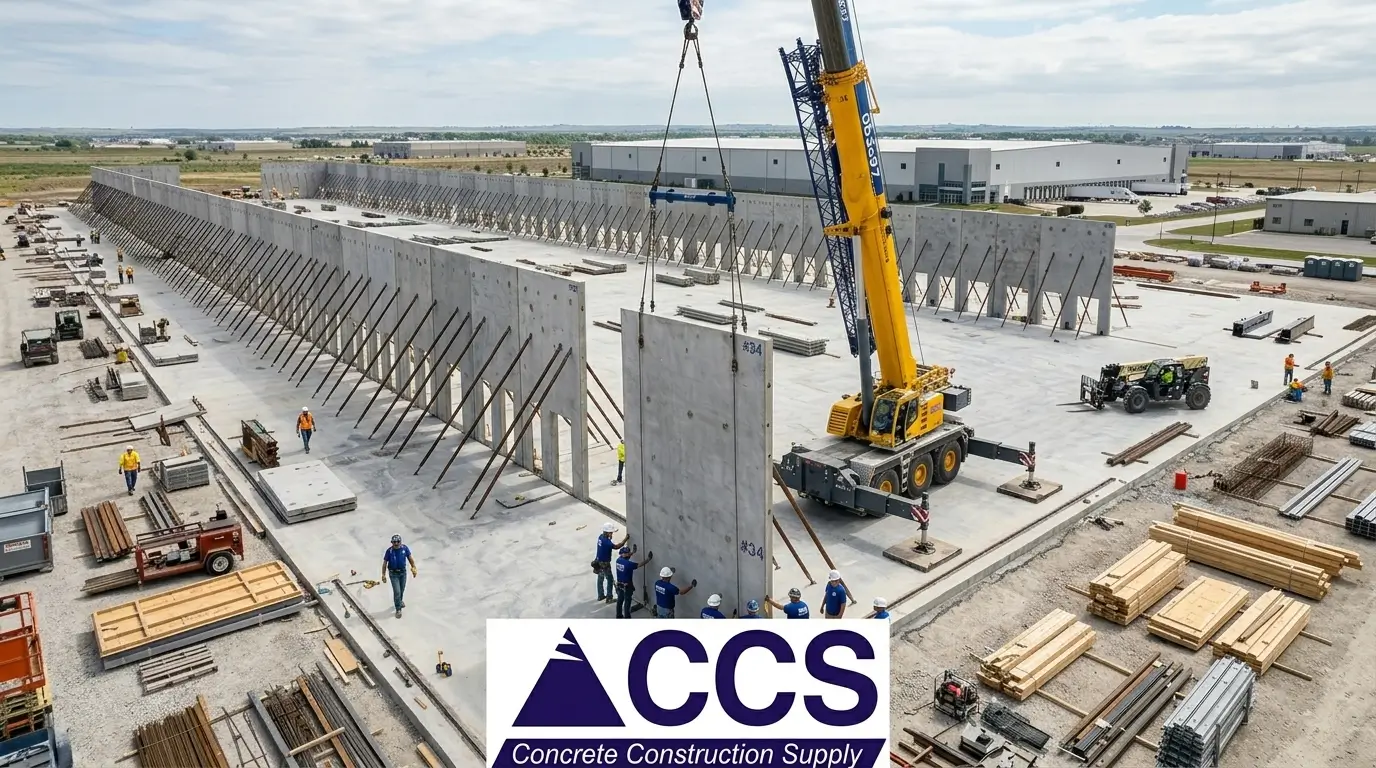
How Tilt Wall Panels Improve Efficiency and Reduce Labor in Large-Scale Projects?

Stamped vs Decorative Concrete: What’s the Difference?

What Is the Role of Prefabricated Rebar Cages in Modern High-Rise Construction
How Tilt-Up Construction Works and What Makes it a Popular Choice in a Commercial Building
Share
Recent Posts
May 6, 2026
7 Benefits of Using Modular Concrete Forms for Faster and More Efficient Projects
Key Takeaways: Building Smarter, Not Harder Time is money in modern construction, and delays inevitably eat into both budget and reputation. However, remaining...
May 3, 2026
How Tilt Wall Panels Improve Efficiency and Reduce Labor in Large-Scale Projects?
Key Takeaways: On large commercial job sites, every day that’s lost takes a toll on the budget. For contractors and developers managing warehouses,...
April 22, 2026
Stamped vs Decorative Concrete: What’s the Difference?
Key Takeaways: In a one-on-one comparison of stamped vs decorative concrete, “scope” is the biggest difference. Keep in mind that stamped concrete is...

